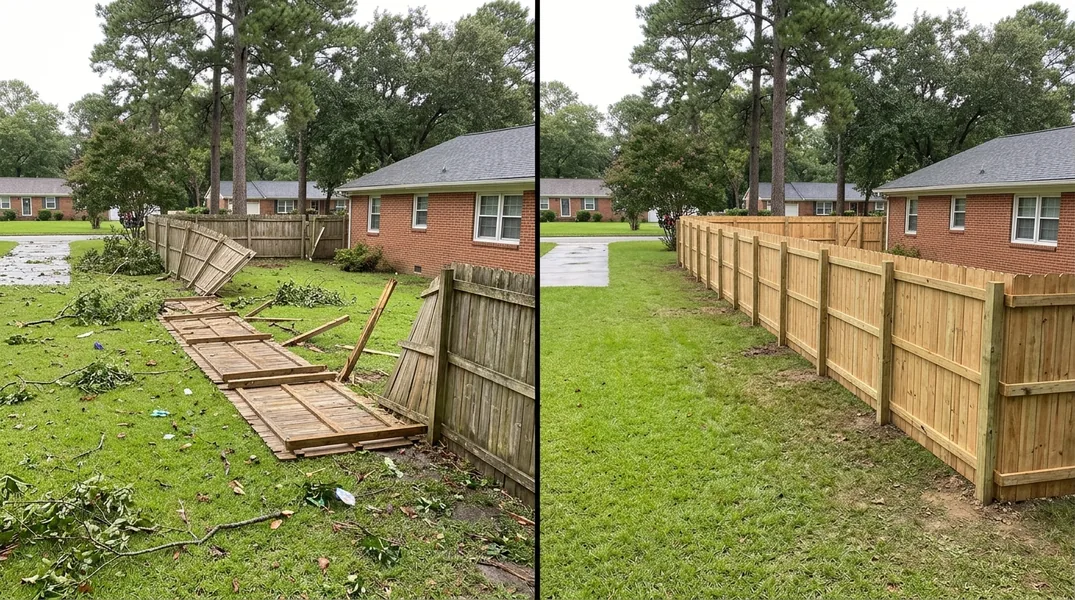
After the Storm: Your First 24 Hours When the Fence Blew Down
Coastal Virginia weather does not mess around. Between nor'easters, tropical systems, and the fast-moving thunderstorms that roll through Newport News in summer, fences take a beating. If you walked outside this morning to find panels leaning, posts snapped, or a whole section flat on the lawn, the first thing to do is slow down and assess safely before you touch anything.
Start by checking for hazards. Downed power lines, leaning trees, and loose boards with exposed nails are the priority. Keep kids and pets away from the damaged area, and if a post is pulling out of the ground with concrete attached, do not try to muscle it back into place yourself. Take photos and short videos from several angles before you move a single board. That documentation is the backbone of any insurance claim, and it is much harder to recreate later. Once the scene is recorded, you can carefully clear debris from walkways and driveways, but leave structural decisions to a professional. If you are unsure whether the damage is repairable or a full replacement is smarter, a quick call to (757) 244-9566 can save you from making an expensive mistake in the first 24 hours.
Does Homeowners Insurance Cover Fence Damage in Virginia?
This is the question we hear most often after a storm, and the honest answer is: usually yes, but with conditions. Most standard homeowners policies in Virginia treat a fence as part of the dwelling structure, which means wind damage, fallen tree impact, and hail are typically covered. What is often not covered is damage from neglect, normal wear and tear, or flooding, which usually requires a separate flood policy. If your fence was already rotting at the base before the storm, the adjuster may attribute part of the loss to deferred maintenance and reduce the payout.
The claims process itself is straightforward if you stay organized. Report the damage to your insurer promptly, provide your photos and video, and get a written estimate from a licensed fence contractor before the adjuster visits if possible. In Virginia, insurers generally expect you to mitigate further damage, which means a temporary brace or tarp is a reasonable step. Keep every receipt. One useful resource for homeowners navigating the claims side is the Virginia Bureau of Insurance, which publishes consumer guides on property claims and adjuster conduct. You do not need to be an expert, but understanding your deductible and coverage limits before you call will make the conversation much smoother. If your policy has a separate wind or hurricane deductible, which is common in coastal areas, factor that into your decision about whether filing is even worth it.
Hurricane Fence Damage Repair Near Me: When to Call a Pro
Some repairs are genuinely DIY-friendly: a single picket, a loose gate hinge, a board that popped free in a wind gust. But hurricane fence damage repair is a different category. When a storm has pushed a fence out of plumb, sheared posts at the ground line, or twisted entire runs, the structural integrity of the whole fence is in question. A fence that looks mostly fine above ground can have compromised footings, and patching it back together often just delays a full collapse until the next storm.
This is where a local contractor earns their keep. A professional assessment will check post depth, concrete condition, rail connections, and whether the fence line is still square to your property boundary. In Hampton and across the Peninsula, we regularly see fences installed with posts set too shallow for our soil conditions, which is why they fail first in high wind. If your fence is wood and more than a few panels are damaged, it is often more economical to replace a full run than to piece it back together. For homeowners considering an upgrade while they repair, Wood & Privacy Fence Installation remains the most popular choice locally, though Vinyl & PVC Fence Installation holds up particularly well in salt air and storm conditions. If you want a professional eyes-on assessment, request a free estimate and we will tell you honestly whether repair or replacement makes more sense.
Repair Timelines in Newport News: What to Realistically Expect
Timelines after a major storm are driven by two things: contractor availability and material lead times. In the first week after a named storm, every fence company on the Peninsula is slammed. Expect scheduling to stretch. A small repair, such as resetting a gate or replacing a few pickets, can often be handled within one to two weeks once you are on the schedule. A full section replacement typically runs two to four weeks from contract to completion, assuming standard materials are in stock. Custom heights, specialty caps, and certain vinyl colors can add time.
Insurance can extend the timeline further. If your claim requires an adjuster visit and approval before work begins, add one to three weeks depending on the insurer's backlog. The smart move is to get on a contractor's schedule for the repair estimate early, even while the claim is pending, so you are not waiting on two queues at once. Homeowners in Poquoson and other low-lying areas should also plan for permit review if the fence is being replaced rather than repaired, since some jurisdictions require it for structural replacement. Ask your contractor upfront who handles the permit. A reputable company will know the local requirements and factor that into the timeline rather than surprising you with it later.
Repair or Replace? Making the Call After Hurricane Damage
The repair-versus-replace decision usually comes down to three factors: age, extent of damage, and material. A wood fence that is eight to ten years old and lost three panels in a storm is probably nearing the end of its useful life anyway. Putting money into repairs on a fence that will need full replacement in two years is rarely a good return. On the other hand, a five-year-old vinyl fence with one cracked panel is an easy fix, and replacement would be wasteful.
Pay attention to the posts. If more than a couple of posts are compromised, the fence's structural system is failing, and repairs become a patchwork. This is also the moment to think about whether your current fence was the right fit for the exposure. Properties with open fetch to the wind might benefit from sturdier post spacing or a different material entirely. Chain Link Fence Installation is a practical, storm-resilient option for pet containment and security, while Aluminum & Ornamental Iron Fencing offers excellent wind performance with a more decorative look. If budget is the deciding factor, our pricing page lays out typical ranges so you can compare repair costs against replacement before you commit. Homeowners in Williamsburg and throughout the region ask us this question every storm season, and the answer is always specific to the fence in front of us, not a one-size-fits-all rule.
Looking for a professional fence contractor in Newport News? Newport News Fence responds fast for all your fence needs.
Get a Free Quote