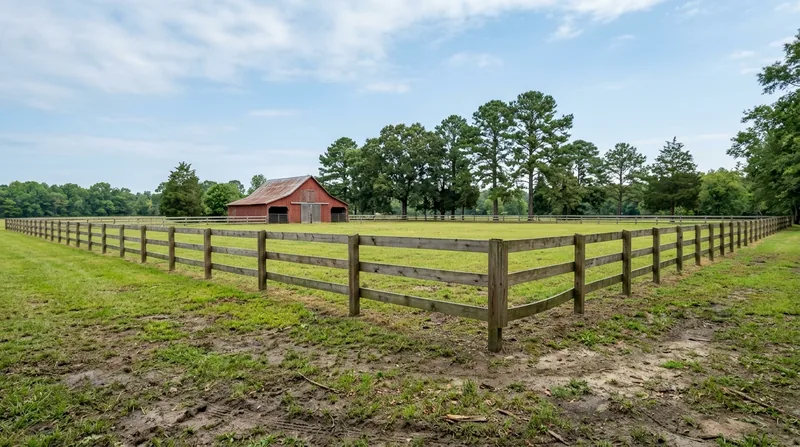




When you need farm fence installation in Newport News, the job is less about a tidy backyard line and more about holding a straight line across soft, low ground for years. The Peninsula's sandy loam and clay sits over a high water table, so corner posts and brace assemblies have to go deeper than a residential privacy fence ever would. We run ranch rail, no-climb horse fence, field wire and pipe fencing for acreage from the James River side out toward Lee Hall and over into James City, York, Gloucester, Isle of Wight and Surry. Long runs get stretched and braced properly, not stapled and hoped for. If your place is closer in, our wood and privacy fence crews handle the residential side of the same property line. Livestock, equipment and trailer gates all need to swing and latch after a nor'easter, and that starts with posts set right the first time.
Why Farm & Ranch Fencing Matters on Newport News Acreage
Most of the acreage around Newport News sits flat and low, with tidal creeks and marsh edges cutting through it. That ground stays wet after rain, and a post tamped into it will work loose within a season or two. Wind off the rivers and the occasional nor'easter push on long, unbraced runs harder than on any backyard fence. Salt air also eats galvanized coatings faster than inland buyers expect, so hardware and coating choices matter here.
- Corners and end posts get set in concrete and braced, because soft ground will not hold a tamped post on a long pull.
- Line posts are spaced to the material and the load, not to a generic number pulled off a box.
- Gates are sized for tractors, trailers and hay equipment, with the bracing to match the span.
- We work from your existing survey and install on the line you identify, and Virginia 811 utility locates get called before any digging.
Getting the bracing and post depth right is what separates a fence that lasts from one you re-stretch every spring.
Key info: On a wet pasture edge off the Warwick River, we set 6-inch corner posts 42 inches deep in concrete with a double brace, because a tamped corner pulled out inside two years on the same ground.
Fence height and setback rules come from the city or county building department and vary across the region, so confirm the local requirement before you stake a line. You can start with the City of Newport News for local department contacts.
How We Build Ranch Fencing Across the Peninsula
Every acreage job starts with a walk of the line and a look at the ground. We check where it stays wet, where the marsh edge sits and where equipment can actually get to. Then we set the corners and braces first, because everything else pulls against them. Only after the frame is solid do we stretch wire or hang rails.
- We walk the fence line with you and mark corners, gates and any wet or low spots.
- We call 811 for utility locates and confirm the line against your survey before digging.
- We set corner, end and gate posts in concrete, then brace them against the pull direction.
- We set line posts, stretch field wire or no-climb mesh with a stretcher bar, and hang rails level or racked to the ground.
- We hang gates with proper bracing and hardware, then walk the whole run and tension it before we leave.
On long runs, we keep the line straight by sighting from corner to corner rather than following every dip in the ground.
Local example: A 12-acre horse setup near Yorktown needed a no-climb run along a wet drainage swale. We stepped the posts to the ground instead of racking the wire, so the bottom stayed tight to the soil and the horses could not push under it.
For properties that also need a driveway or equipment gate, our gate installation and repair crews build the same bracing into the opening.
Farm Fencing Methods We Use in Newport News
The right material depends on what you are keeping in and what the ground will hold. A horse pasture, a cattle line and a property boundary each call for a different approach. Here is how the main options compare on Peninsula ground.
| Approach | Description | Best for |
|---|---|---|
| Split rail | Wood or vinyl rails on posts set in concrete, with wire added where needed. | Property lines, paddock edges and a traditional look. |
| No-climb horse fence | Woven mesh with small openings, stretched tight and braced at corners. | Horse turnout, where hooves and legs need protection. |
| Field wire and barbed wire | Galvanized wire strands or woven field wire on treated posts. | Cattle and larger acreage at a lower cost per foot. |
| Pipe fence | Steel pipe posts and rails, welded or sleeved, set deep in concrete. | Heavy livestock, equipment areas and long-term durability. |
Mixing materials is common here, such as split rail along the road and no-climb inside the pasture, and we will tell you where that saves money and where it does not.
Farm & Ranch Fencing Cost in Newport News: What to Expect
Farm fencing runs from about $12 per foot for a basic field wire or split rail line and climbs from there. No-climb horse fence, pipe and long braced runs cost more because of material and labor. The biggest cost drivers on Peninsula ground are post depth in soft soil, the number of corners and gates, and how far equipment has to travel over wet ground.
- Wet or marshy stretches need deeper posts and more concrete, which adds labor.
- Clearing brush or old fence along the line adds time before a single post goes in.
- Gates sized for trailers and tractors carry their own bracing cost.
- Long straight runs cost less per foot than short, broken lines with many corners.
Get two or three written estimates on the same line and the same material, and the numbers will tell you who is actually accounting for the ground. Our full pricing overview breaks down the material options in more detail.
What to Look for in a Fence Contractor Near Newport News
Hiring for acreage is different from hiring for a backyard. Ask how corners and braces will be built, how deep posts go in wet ground and how the crew will get equipment to the line. Fence licensing here is set county by county, and projects at or above certain dollar thresholds require a licensed general contractor, so confirm what applies to your job with the local building department. Ask any contractor for proof of general liability and workers' compensation cover, and request a certificate of insurance.
- Ask for references on similar acreage jobs, not just backyard fences.
- Confirm the crew calls 811 for utility locates before digging, as the law requires.
- Check HOA and deed restrictions in master-planned communities before you choose material or height.
- Make sure the estimate states post depth, bracing and gate hardware, not just a per-foot number.
A contractor who will walk the wet spots with you and explain the bracing is the one worth hiring. You can request a free estimate and we will look at the ground before quoting.
Farm & Ranch Fencing in Newport News: Pricing Guide
| Service | Price | Details |
|---|---|---|
| Field wire or split rail line | Starting at $12/ft | Treated posts set and braced, wire or rails installed, basic straight runs on firm ground. |
| No-climb horse fence | Starting at $16/ft | Woven mesh stretched tight with braced corners, sized for horse turnout and paddock edges. |
| Pipe fence installation | Starting at $28/ft | Steel pipe posts and rails set deep in concrete, priced by span and gate openings. |
| Barbed wire and multi-strand | Starting at $9/ft | Galvanized strands on treated posts, priced by number of strands and line length. |
| Complex or large-scale job | On estimate | Wet ground, heavy brush clearing or long braced runs need an on-site look first. |
| Estimate | Free | Response within 24h at (757) 244-9566, no obligation to book. |
Indicative pricing, the exact cost depends on square footage, finish, and site access. Free personalized estimate within 24h at (757) 244-9566.


