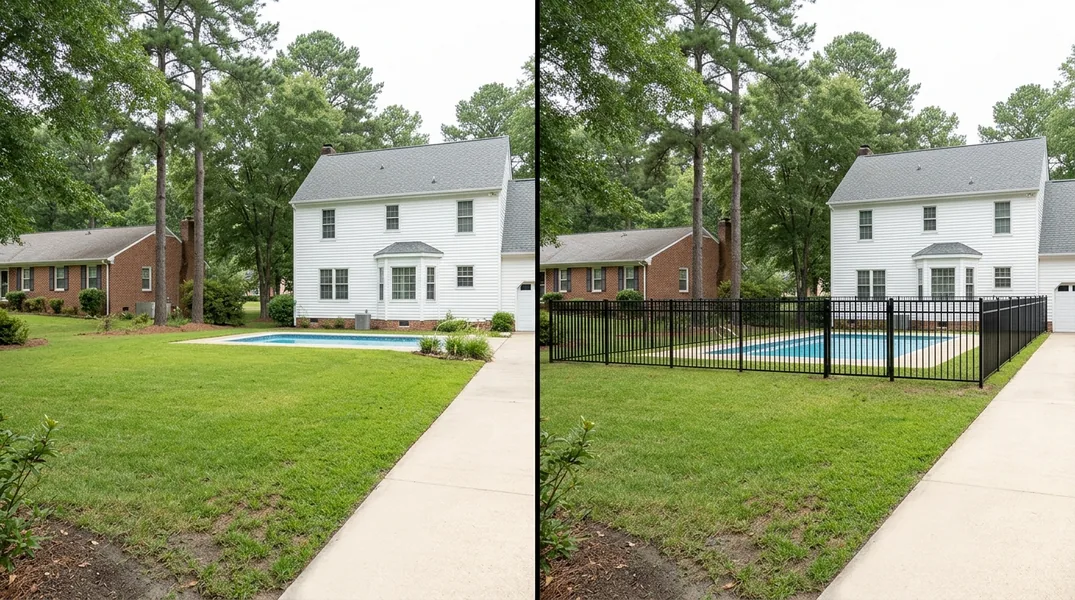
Why Pool Fence Rules Matter for Newport News Homeowners
If you are adding a pool to your backyard in Newport News, the fence around it is not just a landscaping choice. It is a safety barrier, and in Virginia it is treated as one by building officials, insurers, and the people who will swim in that water. A properly built pool fence keeps children and pets out when the pool is not in use, and it protects you from liability if someone wanders in uninvited.
Before you buy panels or call an installer, it helps to understand what the code actually asks for and which questions to raise early. The rules are not complicated, but they are specific, and small details like gate hardware and latch height are where most do-it-yourself projects run into trouble. This guide walks through the practical side of pool fence installation in Newport News so you can plan with confidence.
What Virginia's Pool Fence Code Requirements Actually Say
Virginia adopts the International Swimming Pool and Spa Code, and local building departments enforce it during permit review and final inspection. The core requirement is a barrier that completely surrounds the pool and separates it from the house and yard, with no gaps that a small child could slip through. That means the fence line has to be continuous, and any opening, including the space under the fence, needs to be small enough to prevent passage.
The code also addresses climbability. Horizontal rails, decorative lattice, and nearby objects like HVAC units, benches, or tree limbs can turn a fence into a ladder. Inspectors look at the whole barrier, not just the panels. If you are unsure how your property layout fits the rules, a free estimate visit is a good time to walk the yard and flag problem spots before construction starts.
Pool Fence Height Requirements and Gate Standards
The most common question homeowners ask is about height. Virginia's pool fence height requirements call for a barrier at least 48 inches tall, measured on the side facing away from the pool. That height must hold around the entire perimeter, and the fence cannot have footholds or handholds that make climbing easy. Some communities and insurers ask for more, so check your HOA rules and homeowner policy before settling on a design.
Gates are where inspections often fail. A compliant gate must be self closing and self latching, and it must swing away from the pool area. The latch needs to be positioned high enough that a young child cannot reach it, typically at least 54 inches from the ground, or otherwise designed to resist opening by small hands. A self closing pool gate that drags, sticks, or fails to latch on its own is a red flag for inspectors and a real safety hazard. Quality hinges and a sturdy post matter as much as the gate itself.
Choosing the Right Fence Style for a Pool Barrier
Not every fence material works well around a pool. The barrier has to resist moisture, chlorine splash, and constant sun while staying rigid enough to pass the climb test. Vinyl & PVC Fence Installation is a popular pick because it does not rot, cleans up easily, and can be built with tight picket spacing that meets code. Aluminum & Ornamental Iron Fencing offers a slimmer look and strong security, provided the picket spacing stays within the allowed limits.
Wood remains a favorite for homeowners who want a natural look that blends with the landscape. Wood & Privacy Fence Installation can be built to code height with solid panels that block sightlines and keep the pool area private. The tradeoff is maintenance: wood near a pool needs sealing and occasional repair to stay solid. If budget is the priority, Chain Link Fence Installation with privacy slats is an option, though the slats and framework must still meet the climb and gap rules.
Pool Fence Installation Near Me: Questions to Ask Before You Hire
When you start calling contractors, ask whether they pull the permit and whether they have built pool barriers that passed inspection in Newport News. A general fence builder who mostly does property lines may not know the gate and latch details that pool inspections focus on. Ask for the specific latch height they plan to use, how they will handle any slope along the fence line, and what they do about gaps under the bottom rail.
It is also fair to ask about pricing in writing, including gate hardware and any grading work. A clear quote should separate materials, labor, and permits so you can compare bids honestly. If you live in nearby Hampton or Poquoson, confirm the crew works in your city and knows the local inspection process. Reputable installers will welcome these questions, and the answers tell you a lot about how the job will go.
Get Your Pool Barrier Right the First Time
A pool fence is one of the few home projects where the details genuinely matter for safety. Height, gate swing, latch position, and gap size all come up during inspection, and fixing them after the fact costs more than building them correctly from the start. Spending an hour planning now saves weeks of back and forth with the building department later.
Newport News Fence builds pool barriers for homeowners across Newport News, including Williamsburg area clients who want a code compliant fence that looks good for years. Call (757) 244-9566 to talk through your layout, or request a free estimate and get a clear plan before the first post goes in the ground.
Looking for a professional fence contractor in Newport News? Newport News Fence responds fast for all your fence needs.
Get a Free Quote